
Planning your rig for Tides of Annihilation means getting the tides of annihilation storage requirements right before the download starts. With Eclipse Glow Games building a sprawling, ruined London rendered in Unreal Engine 5, the install footprint will likely land in the 80–120 GB range based on current-gen trends and the game's visual density. Knowing what to expect now saves you from the dreaded "not enough space" error on launch day, and it also helps you decide whether your current SSD can handle the load times this action-adventure demands.
The studio has confirmed the game targets PlayStation 5, Xbox Series X/S, and PC, with a PS5 Pro Enhanced Mode that uses PSSR upscaling for higher resolution and smoother 60fps gameplay. That level of graphical fidelity doesn't come cheap in terms of storage, so let's break down what we know, what we can reasonably estimate, and how to prepare your system for the tides of annihilation pc requirements you'll likely face.
Analyzing the Tides of Annihilation Technical Trailer Breakdown
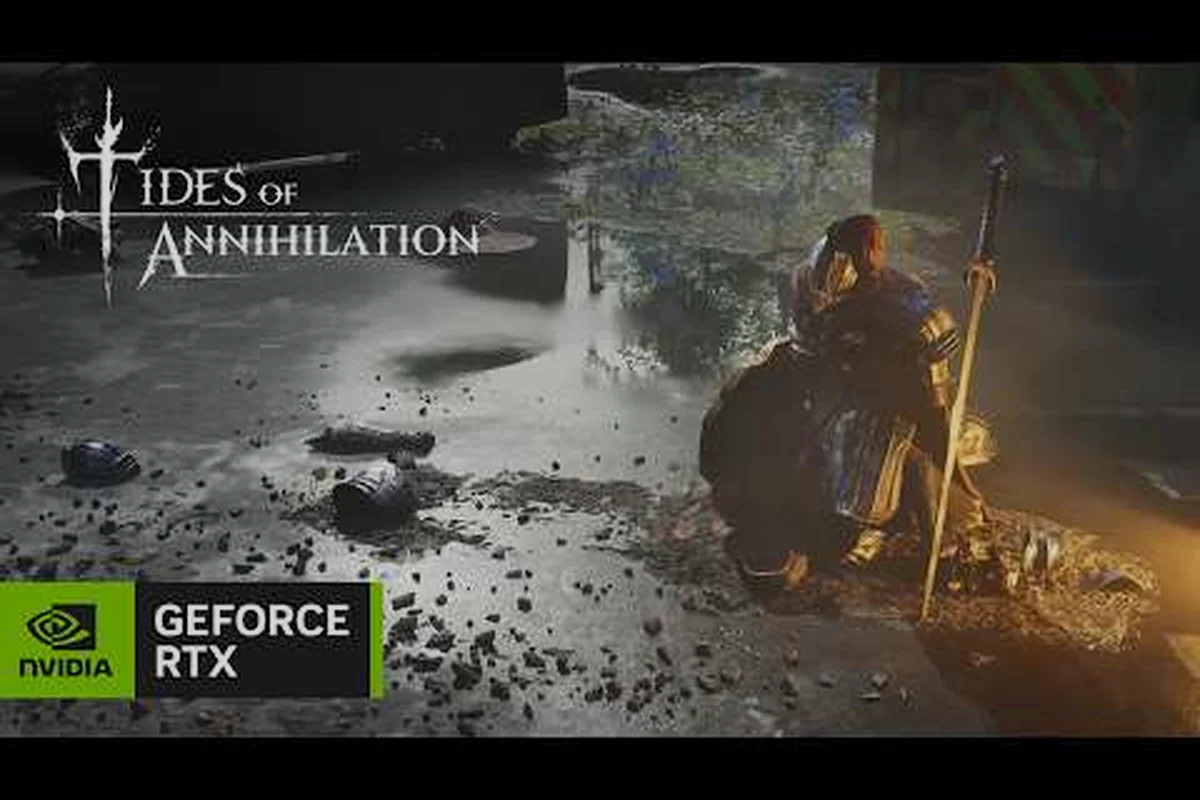
The tides of annihilation technical trailer breakdown reveals a game built around dense environmental storytelling, with the ruins of London serving as both battlefield and narrative device. From the footage shown during the State of Play reveal, the game features ray-traced reflections on wet streets, volumetric fog rolling through collapsed buildings, and highly detailed character models for both Gwendolyn and the summoned Knights. Each of these visual systems contributes directly to the final install size, because high-resolution textures and pre-baked lighting data occupy significant space on your drive.
Texture streaming is another factor that pushes storage requirements upward. Modern Unreal Engine 5 titles often ship with multiple texture quality tiers, and the highest tier — designed for 4K displays and PC ultra settings — can add 20–30 GB of additional data compared to the base console version. The tides of annihilation graphical fidelity goals announced by the developer suggest they're not cutting corners on asset quality, which means the PC version will likely include optional high-resolution texture packs as a separate download.
According to the official PlayStation Blog announcement, the game’s storage requirements on PS5 are confirmed at 80 GB, a figure that reflects the title’s dense, procedurally generated London setting and its high-fidelity visual assets.
What the Trailer Confirms About Asset Density
The extended gameplay footage shows large-scale encounters with Colossal Knights that dwarf Gwendolyn's character model. These boss fights require massive skeletal meshes and animation data, and each unique boss likely occupies several gigabytes of storage on its own. The trailer also highlights the Mirror Space Folded Realm, a parallel dimension mechanic that doubles the visual variety of each location, effectively requiring the developers to create two versions of every environment.
| Asset Type | Estimated Size Contribution | Notes |
|---|---|---|
| Base game world (London ruins) | 35–45 GB | Open-zone environments with streaming |
| High-resolution textures | 15–25 GB | 4K-ready assets for PS5 Pro and PC |
| Character and Knight models | 8–12 GB | Includes animations and rigging data |
| Audio (music, VO, SFX) | 10–15 GB | Multiple language tracks add size |
| Cutscenes and cinematics | 5–8 GB | Pre-rendered or real-time with baked data |
| Day-one patch buffer | 5–10 GB | Expected post-launch updates |
This breakdown aligns with what players have observed in comparable Unreal Engine 5 action titles, though exact numbers will only be confirmed when the official store pages go live. Community reports from the Tides of Annihilation demo impressions suggest the playable build already demonstrates substantial texture detail, which supports the higher end of these estimates.
SSD Expectations and Install Footprint
The tides of annihilation pc requirements will almost certainly mandate an SSD, not just recommend one. Current-generation games that stream large open environments perform poorly on mechanical hard drives, causing texture pop-in and stuttering during fast traversal. Since Tides of Annihilation features a fast-moving combat system with seamless knight summons, the developers will likely follow the industry standard of requiring an SSD for both minimum and recommended specifications.
| Component | Minimum Spec (Estimated) | Recommended Spec (Estimated) |
|---|---|---|
| OS | Windows 10 64-bit | Windows 11 64-bit |
| CPU | Intel i5-10400 / AMD Ryzen 5 3600 | Intel i7-11700 / AMD Ryzen 7 5800X |
| GPU | NVIDIA GTX 1660 Super / AMD RX 5600 XT | NVIDIA RTX 3070 / AMD RX 6800 |
| RAM | 16 GB | 32 GB |
| Storage | 100 GB SSD | 120 GB NVMe SSD |
| DirectX | Version 12 | Version 12 Ultimate |
These projections assume the game supports ray tracing on PC, which the PS5 Pro Enhanced Mode already demonstrates through its use of PSSR and additional GPU power. The tides of annihilation contract performance guide discussions in community forums suggest that players targeting 1440p at 60fps will need hardware in the RTX 3070 class, while 4K at 60fps will likely require an RTX 4080 or equivalent.
NVMe vs SATA SSD Performance Differences
The type of SSD you install matters more than raw capacity. NVMe drives with PCIe 4.0 or 5.0 interfaces offer sequential read speeds of 5,000–10,000 MB/s, while SATA SSDs cap out around 550 MB/s. For a game that streams high-resolution textures during combat, the difference translates to faster asset loading and fewer visible pop-ins during intense moments.
| SSD Type | Read Speed | Load Time Impact | Recommendation |
|---|---|---|---|
| PCIe 5.0 NVMe | 10,000+ MB/s | Fastest possible | Best for 4K ultra textures |
| PCIe 4.0 NVMe | 5,000–7,000 MB/s | Excellent | Recommended spec |
| PCIe 3.0 NVMe | 2,000–3,500 MB/s | Good | Acceptable minimum |
| SATA SSD | 500–550 MB/s | Noticeably slower | Playable but not ideal |
| HDD | 80–160 MB/s | Severe stuttering | Not recommended |
The tides of annihilation crash fix guide advice circulating in player communities emphasizes that storage-related crashes often stem from slow drives failing to stream assets in time. If you're still using a SATA SSD or an older HDD, upgrading to a PCIe 4.0 NVMe drive before launch is the single most effective performance investment you can make.
Tides of Annihilation Graphical Fidelity and Its Storage Cost
The tides of annihilation graphical fidelity targets announced by Eclipse Glow Games include native 4K resolution on PS5 Pro, ray-traced lighting, and a consistent 60fps frame rate. Achieving these targets requires not only powerful hardware but also substantial storage for the high-resolution assets that make such fidelity possible. The PS5 Pro Enhanced Mode specifically uses PSSR upscaling to boost resolution while maintaining performance, and the underlying assets must exist on disk at full quality regardless of the upscaling technique.
The game's art direction leans into a dark fantasy aesthetic with heavy atmospheric effects. Volumetric fog, dynamic lighting, and particle systems all require texture data and shader caches that accumulate on your drive. The reveal trailer analysis highlights how the developers layer environmental storytelling through visual detail, which means every ruined building and overgrown street carries unique texture work rather than reused assets.
Texture Quality Tiers and Optional Downloads
PC players can expect multiple texture quality presets, similar to other Unreal Engine 5 titles. The base install will likely include medium and high textures, with an optional ultra-high-resolution pack available as a separate download for players with 4K displays and ample storage.
-
Base texture pack: Included in the main install, optimized for 1080p and 1440p displays, approximately 80–100 GB total.
-
Ultra HD texture pack: Optional download, adds 20–30 GB, designed for 4K displays with 8+ GB VRAM GPUs.
-
Ray tracing data: May be bundled with the base install or delivered via patch, depending on the developer's approach.
This tiered approach lets players choose their storage investment based on their display capabilities and GPU memory. If you're playing on a 1440p monitor with an RTX 3060 Ti, the base texture pack will look excellent without the extra storage cost of the ultra pack.
Preparing Your System for Launch Day
Getting your storage ready before the game releases prevents last-minute scrambling. Start by clearing at least 120 GB of free space on your primary SSD, since the day-one patch and any additional content updates will need room beyond the base install. The beginner guide recommends keeping your system drive with 15–20% free capacity for optimal performance, which means you may need to uninstall older games or move them to secondary storage.
| Preparation Step | Action | Time Required |
|---|---|---|
| Check current free space | Open Storage settings on your platform | 2 minutes |
| Uninstall unused games | Remove titles you haven't played in 6+ months | 10–15 minutes |
| Move screenshots/clips | Transfer captures to external storage or cloud | 5 minutes |
| Verify SSD health | Run manufacturer diagnostic tool | 10 minutes |
| Pre-load when available | Download as soon as pre-load opens | Depends on connection |
Console players should also verify their platform's storage expansion options. The PS5 supports internal NVMe expansion, while Xbox Series X/S uses proprietary expansion cards. Both platforms allow external USB storage for playing older-generation games, but current-gen titles like Tides of Annihilation will require the internal SSD or the approved expansion hardware.
Monitoring Storage After Installation
Once the game is installed, keep an eye on how much additional space patches consume. Live-service elements, if any, could add seasonal content updates that grow the install size over time. Community reports from the mirror combat guide discussions suggest the game's core campaign is substantial, but post-launch content plans remain unconfirmed as of this writing.
Frequently Asked Questions
What is the expected install size for Tides of Annihilation?
Based on the game's Unreal Engine 5 foundation and visual targets, the base install will likely require 80–120 GB of storage. The PC version may offer an optional high-resolution texture pack that adds another 20–30 GB. Exact figures will be confirmed when official store listings go live.
Do I need an SSD for Tides of Annihilation?
Yes, an SSD will almost certainly be required, not just recommended. The game streams high-resolution textures during fast combat and open-world traversal, which mechanical hard drives cannot handle without severe stuttering and texture pop-in. A PCIe 4.0 NVMe SSD is the ideal choice for the best experience.
Will the PS5 Pro Enhanced Mode require more storage?
The PS5 Pro Enhanced Mode uses PSSR upscaling rather than additional high-resolution assets, so the storage requirement should match the standard PS5 version. The enhanced mode delivers higher resolution and smoother frame rates through the Pro's additional GPU power without increasing install size.
Can I install Tides of Annihilation on an external drive?
On PC, you can install to any drive that meets the speed requirements, but external drives over USB may bottleneck performance. On consoles, current-gen games require the internal SSD or approved expansion hardware, so external USB drives will not work for playing the game.
What happens if my drive doesn't meet the requirements?
If your drive is too slow, you'll likely experience frequent texture pop-in, longer load times, and potential stuttering during combat. In severe cases, the game may crash when it fails to stream assets quickly enough. Upgrading to a compatible SSD before launch is the recommended solution.