
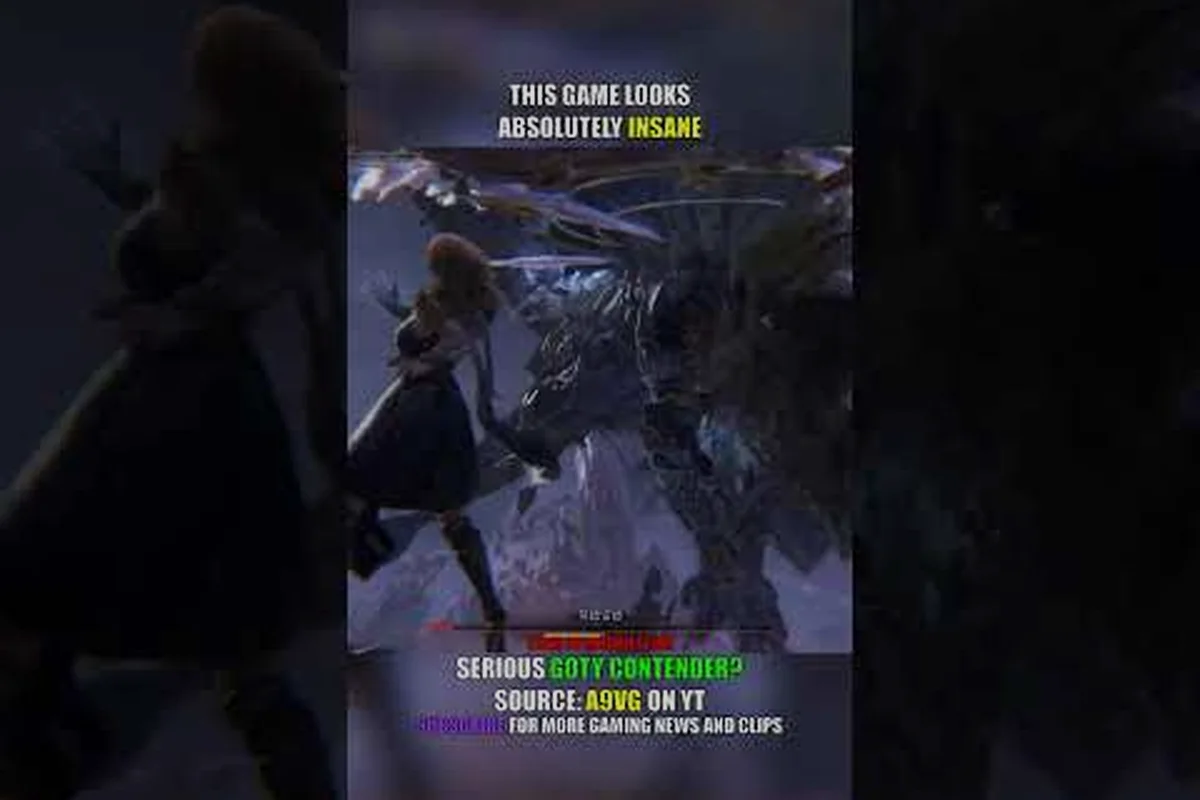
The Tides of Annihilation legend of King Arthur explained here isn't a dusty retelling of medieval romance — it's a violent collision between modern London and the mythic realm of Avalon. The game reimagines Arthurian lore through the eyes of Gwendolyn, a lone survivor who fights alongside spectral Knights of the Round Table against an otherworldly invasion. Understanding how this Arthurian framework drives the narrative matters because it shapes every quest, boss encounter, and world-building choice you'll experience. Get ready to uncover the gods of Avalon, the shattered city, and the Grail quest that binds it all together.
The Arthurian Foundation Behind the Tides of Annihilation Story Details
The Tides of Annihilation story details draw heavily from the Matter of Britain, but Eclipse Glow Games twists familiar legends into something darker and more personal. According to the official Steam store page, the game follows Gwendolyn as she fights alongside spectral knights to save her family and piece a broken world back together. That synopsis sounds straightforward, yet the actual narrative layers Arthurian iconography onto a modern catastrophe in ways that reward close attention.
The core premise centers on the Holy Grail, but it's not the cup of Christ from medieval tradition. Instead, the Grail functions as a world-restoring artifact that Gwendolyn must locate to save her sister and exact vengeance on the demi-gods of Avalon. This reframing turns a passive religious relic into an active gameplay objective, which explains why Grail Shards serve as the primary collectible currency scattered across the ruined city.
The Knights of the Round Table appear not as living heroes but as spectral allies bound to Gwendolyn's will. This is where the Dual Frontline battle system gets its narrative justification — you're literally summoning legendary warriors like Sir Lamorak to fight alongside you. The Xbox Wire developer deep-dive confirms that Sir Lamorak interferes during the Tyronoe boss fight, throwing his spear to help Gwendolyn shatter a mirrored barrier, which proves these knights are active participants in the story rather than passive tools.
Arthur himself remains a shadowy figure in the background. The narrative positions him as a fallen or absent king whose legacy haunts Avalon, while Mordred emerges as a key antagonist orchestrating the invasion. This inversion of the classic Arthur-Mordred conflict gives the Tides of Annihilation legend of King Arthur explained here a tragic undertone — the Round Table's failure echoes through time and manifests as London's destruction.
For a broader look at how the whole narrative fits together, the Tides of Annihilation story explained guide walks through the major plot beats and lore connections in sequence, tracing how Arthur's fractured legend—from the Lady of the Lake's betrayal to the fractured Knights of the Round Table—maps onto the game's twin-protagonist structure, where the sister mystery hinges on which sibling survives the opening London catastrophe. That guide also clarifies why the Grail quest isn't a simple relic hunt but a metaphysical reset tied to the gods of Avalon's cyclical purge, giving you the full cause-and-effect chain before you dive back into the campaign's branching choices.
Who Are the Gods of Avalon and Why Do They Invade?
The Tides of Annihilation who are the gods of avalon question sits at the heart of the game's conflict. These demi-gods aren't benevolent deities watching over humanity — they're conquerors who view modern Earth as a staging ground for their ancient grudges. The game presents them as a fractured pantheon, each with distinct motivations that drive the invasion's progression.
The Demi-God Hierarchy and Their Roles
The demi-gods operate as a loose hierarchy rather than a unified force, which creates interesting narrative friction throughout the campaign. This internal discord is most visible in the rivalry between Cernunnos, who champions the old druidic pact with the land, and the more militant Morrigan, whose war-driven agenda often pits her directly against Arthur’s knights. Rather than a single command structure, their competing claims to Avalon’s sovereignty force players to navigate shifting allegiances, as siding with one faction for a boon—like the Morrigan’s battle blessing—can permanently sour relations with another, altering which Grail quest outcomes become available. Here's how the major figures break down based on community analysis and official reveals:
| Demi-God | Domain | Narrative Role | Known Connection |
|---|---|---|---|
| Tyronoe | Witchcraft, Illusion | Early-game boss who tests Gwendolyn | Creates Mirror Space Folded Realm |
| Mordred | Betrayal, Conquest | Primary antagonist orchestrating invasion | Arthur's nemesis reborn |
| Unnamed Colossal Knights | War, Destruction | Roaming world bosses across London | Serve as the invasion's vanguard |
| Avalon Council | Governance, Law | Background manipulators pulling strings | Rule the fractured realm from shadows |
The Tyronoe encounter serves as the player's introduction to the demi-gods' power scale. According to the Xbox Wire deep-dive, she transforms into a massive bird beast, spawns clones to attack Gwendolyn, and creates a Mirror Space Folded Realm that blocks progression. This isn't just a spectacle — it establishes that each demi-god commands unique reality-warping abilities, which explains why Gwendolyn needs spectral knight support to stand a chance.
The demi-gods' invasion motivation ties directly to the Arthurian civil war. The conflict between Arthur and Mordred didn't end with the traditional final battle — it bled into the fabric of Avalon itself, and the losing factions now seek to claim Earth as compensation. This reframing makes the Tides of Annihilation who are the gods of avalon question more complex than simple villainy, because each god carries genuine grievances from the mythic past.
Community reports suggest the gods view humanity as collateral damage in a war that never truly ended. The invasion isn't about conquest for its own sake but about securing resources and territory for the next phase of their eternal conflict. That's why London gets destroyed rather than occupied — it's a battlefield, not a prize.
The Tides of Annihilation invasion lore guide digs deeper into the fog, the outworld invasion mechanics, and how the gods' arrival reshapes reality itself — but its core revelation is that the fog isn't a natural phenomenon at all. It's the physical manifestation of the Avalon gods' dimensional breach, a tear that allows the outworld titans to phase into London's ruins. This explains why the invasion follows a cyclical pattern: each time the Grail is activated, the fog thickens, and the gods' influence over the mortal plane intensifies, directly tying the invasion's ebb and flow to Arthur's quest for the Grail.
Why London Destroyed: The Modern Stage for Mythic War
Grail Shard Collection: How the PS5 Traversal Loop Maps to London Landmarks
The PlayStation Blog reveal confirms that Grail Shards are the primary collectible, scattered across a Greater London that is fully climbable. Unlike a flat open world, the traversal loop is vertical: you scale the Climbable Colossal Knights—each functioning as an interactive level—to reach shards positioned on rooftops and ruined bridges. The Xbox Partner Preview deep-dive confirms this is not optional; shards gate story progression toward the final Grail reconstruction. Prioritize shards on the Thames-side districts first, as the Folded Realm barriers there require the Grail's completed form to bypass.
The Tides of Annihilation why london destroyed question has multiple layers, and the game's setting choice is far from arbitrary. London serves as the narrative bridge between the modern world and Avalon because of its historical layers — Roman ruins beneath medieval streets beneath contemporary skyscrapers create a physical timeline of conquest and reinvention that mirrors the game's themes.
The destruction itself stems from the Typhoon of London, a catastrophic event that serves as the invasion's opening salvo. This isn't a natural disaster — it's the demi-gods' method of tearing down the barrier between worlds. The typhoon functions as both literal storm and metaphysical breach, allowing Avalon's forces to pour into the mortal realm.
The choice of London carries symbolic weight that the Tides of Annihilation narrative guide highlights through environmental storytelling. The city becomes a climbable ruin, with Colossal Knights roaming Greater London as interactive challenges players can scale and battle. The PlayStation Blog announcement specifically mentions these Climbable Colossal Knights as core gameplay elements, which means the destroyed city isn't just backdrop — it's a vertical playground that tells the story of the invasion through its broken geography.
London's destruction serves three narrative purposes that players should understand: it establishes the modern stakes of the Avalon conflict, grounds the mythic war in a recognizable contemporary setting, and creates the emotional catalyst that drives Arthur's reawakening. By leveling the capital, the game forces the Lady of the Lake's prophecy into stark relief—the mortal realm can no longer ignore the gods of Avalon's war, and players must navigate the Grail quest with London's ruins as a constant reminder of what is lost. This collapse also sets the stage for the sister mystery, as her disappearance becomes intertwined with the city's fall, making the reconstruction of both London and Arthur's legacy a singular, urgent objective.
-
It establishes stakes immediately — the opening moments show a recognizable modern city in ruins, making the threat feel personal and contemporary rather than distant fantasy
-
It creates exploration value — the shattered landmarks become navigable ruins filled with Grail Shards, lore fragments, and optional boss encounters that reward thorough exploration
-
It symbolizes Arthurian decline — the fall of London mirrors the fall of Camelot, suggesting history repeats itself across different eras and civilizations
The Grail Shards scattered across this ruined London tie directly to the restoration theme. Collecting them isn't just busywork — it's a mechanical representation of Gwendolyn piecing together both the world and her understanding of what happened. Each shard recovered reveals more Tides of Annihilation story details about the invasion's true nature and the gods' ultimate plan.
For a deeper examination of the typhoon as a narrative device and its franchise implications, the Tides of Annihilation typhoon of London meaning guide provides extensive analysis. That companion breakdown traces how the storm functions not merely as a cataclysmic backdrop but as a symbolic purging of Arthurian-era sins, mirroring the fall of Camelot through modern urban destruction. It also maps how the typhoon's aftermath directly seeds the grail quest and the sister mystery, showing how environmental storytelling in the game's opening hour sets up the central conflict between Galahad's legacy and the fractured Avalon pantheon, making the London setting a deliberate narrative fulcrum rather than a random disaster.
The Grail Quest Explained: Gwendolyn's Mission Structure
The Tides of Annihilation grail quest explained here reveals a mission structure that blends classic Arthurian questing with modern action-game pacing. Gwendolyn's search for the Holy Grail isn't a linear pilgrimage — it's a fragmented investigation across a shattered city, with each recovered shard revealing more about the invasion and her family's connection to it.
The Quest's Three Pillars
The Grail quest operates on three interconnected tracks that the Tides of Annihilation narrative guide breaks down for players: the physical journey of Arthur's knights across a shattered London, the spiritual trials tied to the Sister mystery, and the metaphysical battle against the gods of Avalon. Each track feeds into the others, meaning the player's choices in combat encounters directly influence which Grail-related lore fragments unlock, ultimately determining whether the Grail is restored or lost to the Tides.
| Quest Pillar | Primary Objective | Narrative Payoff | Gameplay Loop |
|---|---|---|---|
| Shard Recovery | Collect Grail Shards across London | Unlocks memory fragments and lore | Exploration + platforming |
| Knight Liberation | Free spectral knights from bondage | Expands combat options and story reveals | Boss fights + puzzle solving |
| Sister's Rescue | Locate and save Gwendolyn's sister | Drives emotional stakes and ending variations | Story missions + climactic confrontations |
The Shard Recovery pillar forms the backbone of exploration. Each shard carries residual memories that play out as short vignettes, filling in gaps about the invasion's timeline and the gods' true intentions. Community data suggests there are dozens of shards hidden across the map, with some requiring significant platforming challenges to reach — the climbing mechanics on Colossal Knights play a major role here.
The Knight Liberation pillar connects directly to the Dual Frontline combat system. As you free more spectral knights, you gain access to new abilities and loadout options. This creates a satisfying loop where story progression directly translates to gameplay expansion, making the Tides of Annihilation grail quest explained here feel mechanically meaningful rather than purely narrative.
The Sister's Rescue pillar provides the emotional core. Gwendolyn's sister isn't just a damsel in distress — she's connected to the invasion in ways that recontextualize the entire story. The Tides of Annihilation sister mystery runs through the campaign, with clues suggesting she may have deeper ties to Avalon than either sister initially realizes.
According to Wikipedia's overview, the plot follows Gwendolyn's quest to find the Holy Grail to save her sister, restore the world, and exact vengeance on the demi-gods of Avalon. That triple objective — save, restore, avenge — gives the quest clear priorities that players can track throughout the campaign.
The Tides of Annihilation endgame guide covers what happens after the main quest concludes, including post-game content and the save-your-sister quest variations. While the credits roll after the final confrontation with the Grail, the true narrative payoff hinges on the choices you made during the three-pillar questline—specifically whether you sided with the Lady of the Lake or the Green Knight. This branching determines which of the two sister endings you unlock, with the endgame guide detailing how your accumulated Grail shards and allegiance points directly alter the epilogue's cutscene and the post-game Avalon exploration zones available to you.
The Sister as the Grail Motivation
Tyronoe's Mirror Space: A Step-by-Step Phase Breakdown
The Xbox Wire deep-dive details Tyronoe's three-phase structure: she first transforms into a massive bird beast, then spawns clones to split Gwendolyn's focus, and finally creates a Mirror Space Folded Realm that blocks all forward movement. The counter is Sir Lamorak—he appears inside the mirror space, throws his spear, and Gwendolyn must catch it to shatter the barrier. This is the only boss fight where a spectral Knight directly provides a weapon, rather than a passive buff. Save your burst damage for the clone phase, as each clone despawns after one hit.
The Tides of Annihilation sister mystery adds a deeply personal dimension to what could have been a straightforward revenge narrative. Gwendolyn's sister isn't just a motivation device — she's a narrative key that unlocks the game's most significant revelations about the Arthurian connection.
The family's link to Avalon predates the invasion, according to community analysis of early game lore fragments. The sisters appear to be descendants of a bloodline that once served the Round Table, which explains why Gwendolyn can command spectral knights while ordinary survivors cannot. This hereditary connection reframes the Tides of Annihilation legend of King Arthur explained here — the Arthurian legacy isn't just historical background but genetic inheritance that manifests in the present.
The sister's capture by the demi-gods serves multiple narrative functions, acting as the primary catalyst that forces Arthur to abandon his passive stewardship of Camelot and actively pursue the Grail quest. This abduction is not merely a plot device but a deliberate strategic move by the gods of Avalon to destabilize the mortal realm, mirroring how they previously orchestrated London's destruction to sever humanity's connection to the old magic. By holding her hostage, they create a personal stake that binds Arthur's fate to the tides of annihilation, ensuring he cannot simply retreat to Avalon and instead must confront the demi-gods directly, a confrontation that ultimately reveals the sister's true lineage and her own latent connection to the island's ancient power.
-
It personalizes the conflict — Gwendolyn's quest becomes about family rather than abstract world-saving, giving players an emotional anchor
-
It creates moral complexity — the sister's connection to Avalon suggests she may not be an innocent victim, potentially complicating the rescue mission
-
It drives the vengeance arc — the demi-gods' treatment of the sister justifies Gwendolyn's pursuit of retribution, making the violence feel earned
Community reports suggest the sister's role expands significantly in later acts, with some players speculating she may have willingly crossed into Avalon before the invasion. This ambiguity keeps the Tides of Annihilation sister mystery engaging throughout the campaign, as players never quite know whether they're saving a victim or confronting a collaborator.
The Gwendolyn family connection also explains the game's title. The "tides" reference the cyclical nature of the Arthurian conflict — the war between Arthur and Mordred rises and falls like ocean currents, and Gwendolyn's family has been caught in that tide for generations. Her sister's abduction represents the latest crest of that wave, and Gwendolyn must either break the cycle or drown in it.
For a focused breakdown of the Tyronoe boss character and her connection to the sister's fate, the Tyronoe boss character guide offers detailed analysis of the witch's role in the family drama.
How the Arthurian Reimagining Compares to Traditional Legend
The Tides of Annihilation legend of King Arthur explained here diverges significantly from traditional Arthurian canon, and understanding those differences enhances appreciation of the game's creative choices. Eclipse Glow Games isn't retelling Le Morte d'Arthur — they're using familiar names and symbols as raw material for an original mythos.
| Traditional Arthurian Element | Tides of Annihilation Version | Narrative Impact |
|---|---|---|
| Holy Grail as Christ's cup | World-restoring artifact with memory fragments | Shifts focus from faith to action |
| Knights of the Round Table as living heroes | Spectral allies bound to Gwendolyn | Makes combat a narrative extension |
| Arthur as noble king | Absent or fallen figure | Creates mystery and loss |
| Mordred as Arthur's son | Invasion orchestrator and demi-god | Elevates villain to cosmic scale |
| Camelot as golden age | London as shattered modern ruin | Parallels rise and fall across eras |
The spectral knight interpretation is particularly clever because it solves a gameplay-narrative integration problem. Traditional Arthurian stories feature knights as independent agents with their own agendas, which would clash with player-controlled combat. By making them spectral entities bound to Gwendolyn, the game justifies their obedience while preserving their legendary identities.
The Grail's transformation from religious relic to world-restoration device reflects modern gaming's preference for tangible objectives over abstract spiritual goals. Players need something to collect and activate, and the Grail Shards system delivers that while maintaining thematic coherence with the Arthurian source material.
The London setting replaces Camelot as the central location, and this swap carries significant thematic weight. Camelot represented an idealized golden age that inevitably fell; London represents a real, recognizable modern city whose destruction feels more immediate and tragic. The game argues that the Arthurian cycle of rise and fall applies to all civilizations, not just mythic ones.
According to the PlayStation Blog announcement, the world is full of Climbable Colossal Knights roaming Greater London — extremely large interactive challenges players can climb, explore, and battle. This design choice makes the Arthurian giants literal rather than metaphorical, transforming legendary-scale threats into playable encounters that dominate the skyline.
Frequently Asked Questions
How does the Tides of Annihilation legend of King Arthur explained differ from traditional Arthurian stories?
The game reimagines Arthurian myth as a modern catastrophe rather than a medieval romance. The Holy Grail becomes a world-restoring artifact, the Knights of the Round Table appear as spectral combat allies, and London replaces Camelot as the central setting. Mordred transforms from Arthur's son into an invasion orchestrator, elevating the conflict to cosmic scale.
Who are the gods of Avalon in Tides of Annihilation?
The gods of Avalon are demi-gods who orchestrate the invasion of modern London. They include Tyronoe, a witch who creates mirror dimensions, and Mordred, who serves as the primary antagonist. These gods carry grievances from the Arthurian civil war and view Earth as a battlefield for their ongoing conflict rather than a prize to be conquered.
Why was London destroyed in the game's story?
London's destruction stems from the Typhoon of London, a catastrophic event that tears down the barrier between worlds. The demi-gods use this typhoon to invade the mortal realm, transforming the city into a climbable ruin. The choice of London symbolizes the fall of a modern Camelot, suggesting the Arthurian cycle of rise and fall repeats across civilizations.
What is the Grail quest in Tides of Annihilation?
The Grail quest involves collecting Grail Shards scattered across ruined London to restore the world and save Gwendolyn's sister. Each shard contains memory fragments revealing invasion details and family connections. The quest operates on three tracks: shard recovery for exploration, knight liberation for combat expansion, and the sister's rescue for emotional stakes.
Is Gwendolyn's sister connected to Avalon?
Community theories point to a bloodline link, not a direct one. Her family likely served the Round Table, which explains Gwendolyn's spectral knight command. The sister's capture may be a willing crossing into Avalon, a prelude to the invasion, making her a potential key to the Grail Shards quest.