
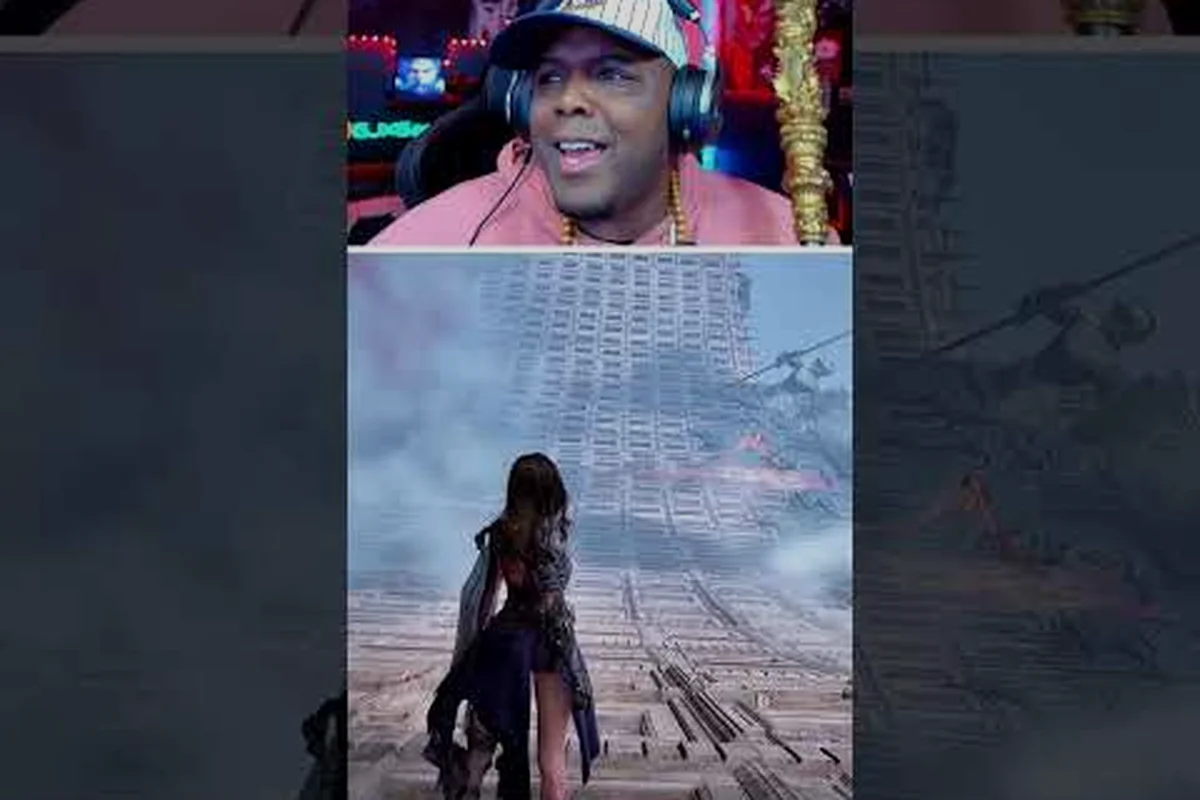
The tides of annihilation typhoon of london meaning sits at the heart of Eclipse Glow Games' upcoming fantasy action-adventure, a title that reimagines Arthurian legend inside a shattered modern metropolis. This isn't just a weather event or a setpiece disaster — the typhoon represents the literal and symbolic rupture between our world and the otherworldly realm of Avalon, and understanding it unlocks the entire narrative framework. Because the game weaves together family tragedy, mythological warfare, and a fractured London, grasping this central concept matters for anyone who wants to follow Gwendolyn's journey without getting lost in the lore. The invasion that tears London apart is the inciting incident, the reason spectral knights walk beside a lone survivor, and the catalyst for everything that follows.
The Typhoon of London as a Narrative Catalyst
The typhoon that devastates London functions as the game's opening catastrophe, but its role extends far beyond a dramatic prologue. According to the official Tides of Annihilation website, the event is described as an otherworldly invasion that fractures the city, unleashing hordes of enemies and forcing Gwendolyn to fight alongside spectral Knights of the Round Table. What makes this more than a simple disaster story is how the typhoon operates on multiple levels simultaneously — it is at once a physical storm, a dimensional breach, and a mythological reckoning.
The physical destruction serves a practical gameplay purpose: it creates the shattered-London playground where combat encounters unfold. But the symbolic weight carries the tides of annihilation franchise mythology forward, establishing that the boundary between mortal and mythic realms has collapsed. The demi-gods of Avalon, who orchestrate this invasion, are not merely attacking — they are reclaiming territory they believe was stolen from them, and London becomes the battlefield for an ancient grudge.
| Narrative Layer | Function in Story | Gameplay Expression |
|---|---|---|
| Physical Storm | Destroys London, creates crisis | Shattered city environments, debris-filled arenas |
| Dimensional Breach | Opens path between worlds | Enemies materialize from rifts, spectral knights phase in |
| Mythological Reckoning | Avalon's gods assert dominance | Colossal boss encounters, demi-god confrontations |
| Personal Tragedy | Gwendolyn loses family, becomes lone survivor | Solo combat segments, rescue missions for her sister |
This multi-layered approach means the typhoon is never just background noise. Every ruined street and every enemy encounter ties back to the central question of why Avalon chose to strike, and what that means for the mortal world. The tides of annihilation story thus begins not with a choice but with a catastrophe, forcing Gwendolyn into a role she never asked for — the last line of defense for a world that barely understands what hit it.
The Central Holy Grail Quest
At the center of the tides of annihilation gwendolyn quest explained narrative stands a protagonist defined by loss and determination. Gwendolyn survives the invasion while her family is scattered or taken, and her mission crystallizes around two objectives: saving her sister and exacting vengeance on the demi-gods responsible. The Holy Grail becomes the macguffin that ties these goals together, because the artifact is said to possess the power to restore what was broken.
The quest structure mirrors classic Arthurian romance while subverting it in meaningful ways. In traditional legend, the Grail is sought by knights seeking spiritual perfection; in Tides of Annihilation, Gwendolyn seeks it for far more personal reasons. She isn't pursuing enlightenment — she's trying to put her family back together and punish those who tore it apart. This shift from holy quest to personal vendetta gives the tides of annihilation plot a modern emotional resonance that pure myth retelling might lack.
The Spectral Knights as Companions
The Knights of the Round Table appear not as living warriors but as spectral allies bound to Gwendolyn's cause. This design choice serves both gameplay and storytelling functions. Mechanically, the knights provide the Dual Frontline Battle System that lets players command two characters simultaneously, switching between them to chain combos and manage crowds. Narratively, their ghostly nature emphasizes that the age of chivalry has passed, and only echoes of that era remain to guide a new hero.
| Knight | Role in Combat | Narrative Significance |
|---|---|---|
| Gawain | Aggressive vanguard, high damage output | Represents the fading ideal of martial honor |
| Lancelot | Balanced fighter, versatile moveset | Embodies the tension between duty and desire |
| Percival | Defensive anchor, crowd control | Symbolizes innocence surviving corruption |
| Galahad | Support specialist, healing abilities | The purest knight, now bound to a vengeful quest |
Each knight carries fragments of the tides of annihilation arthur vs mordred story, because their loyalties and histories were shaped by that original conflict. The betrayal that split Camelot echoes through their spectral existence, and Gwendolyn must navigate those old wounds while forging new alliances.
The Sister as the Emotional Core
Gwendolyn's sister functions as more than a damsel to rescue. She represents everything Gwendolyn fights to protect, and her fate drives the player forward through even the most brutal encounters. The game reportedly weaves her presence through the narrative via flashbacks and intermittent rescue sequences, keeping the stakes personal rather than abstract. This familial anchor prevents the story from becoming a generic save-the-world plot, because the world-saving is always secondary to the sister-saving.
Arthur vs Mordred and the Avalon Civil War
The tides of annihilation arthur vs mordred story provides the mythological backbone for the entire conflict, even though the game's present-day events occur centuries after the original betrayal. The demi-gods of Avalon are not a unified pantheon — they carry the scars of the civil war that destroyed Camelot, and their infighting shapes the invasion of London in ways that aren't immediately obvious.
Arthur's legacy looms large over the narrative. The once and future king may be absent from the mortal world, but his influence persists through the spectral knights who serve Gwendolyn and through the very structure of Avalon's power dynamics. Mordred, the betrayer, left wounds that never healed, and the demi-gods who sided with him now seek to reshape the world in their image. The typhoon of London is, in this reading, the latest chapter in a war that never truly ended.
| Faction | Allegiance | Goal in London Invasion |
|---|---|---|
| Arthur's Remnants | Preserve mortal world | Guide Gwendolyn, protect survivors |
| Mordred's Successors | Dominate mortal world | Harvest power from destruction |
| Neutral Demi-Gods | Self-preservation | Exploit chaos for personal gain |
| Mortal Survivors | Survival | Resist invasion, rebuild society |
Understanding this factional landscape is essential because it explains why the invasion unfolds the way it does. The demi-gods aren't acting with one mind — they're pursuing competing agendas, and Gwendolyn can exploit these divisions. The tides of annihilation franchise mythology thus becomes a web of grudges and alliances that the player must navigate, rather than a simple good-versus-evil confrontation.
The Grail Shards as Narrative Currency
The Holy Grail in Tides of Annihilation doesn't exist as a single artifact waiting to be found. Instead, it's shattered into fragments scattered across the ruined London and the pocket realms connected to it. This design choice extends the gameplay loop — players must hunt down each shard while fighting through increasingly dangerous territories — while also reinforcing the thematic point that restoration requires effort and sacrifice.
Each shard recovery typically triggers a story beat, revealing more about the demi-gods' plans or Gwendolyn's family history. The pacing ensures that the tides of annihilation story never stalls, because every major objective brings both mechanical rewards and narrative revelations. For a deeper dive into how the Grail quest unfolds across the campaign, the story explained guide breaks down each act's major revelations.
Why London and What It Means for the Franchise
The choice of London as the game's setting is anything but arbitrary. London carries centuries of mythological weight, from its Roman foundations to its medieval legends and its modern status as a global city. By shattering it, Eclipse Glow Games makes a statement about the fragility of civilization — if London can fall, nowhere is safe.
The setting also allows for striking visual contrasts. Ancient Arthurian imagery collides with contemporary landmarks, and the spectral knights feel even more otherworldly when they're fighting beside Big Ben or crossing the Thames. This juxtaposition reinforces the tides of annihilation franchise mythology by showing that myth isn't confined to the past — it can erupt into the present at any moment.
The Shattered London as a Character
The ruined city functions as more than a backdrop; it's a character in its own right. Each district tells part of the story, with environmental details revealing what was lost and what survived. The game reportedly uses the city layout to guide players through the narrative, with certain landmarks serving as boss arenas or story-critical locations.
| London Landmark | In-Game Role | Mythological Connection |
|---|---|---|
| Tower Bridge | Early-game traversal hub | Gateway between mortal and mythic realms |
| Westminster Abbey | Mid-game story dungeon | Sacred space defiled by invasion |
| The Shard | Endgame vertical climb | Modern ambition reaching toward Avalon |
| Buckingham Palace | Final confrontation site | Seat of mortal power, now contested |
This environmental storytelling means that players who know London will find extra layers of meaning, while those unfamiliar with the city will still understand the scale of destruction. The tides of annihilation gwendolyn quest explained narrative uses these locations to pace its reveals, ensuring that exploration always feels purposeful.
Setting Up Future Installments
The typhoon of London isn't just this game's inciting incident — it's the foundation for a potential franchise. The tides of annihilation franchise mythology establishes a world where the boundary between mortal and mythic realms remains fragile, which leaves enormous room for sequels and spin-offs. Other cities could fall, other mythologies could collide with the Arthurian framework, and other survivors could rise to meet new threats.
Eclipse Glow Games has positioned this as a single-player experience, but the lore supports expansion. The demi-gods of Avalon represent only one pantheon, and the shattered state of London suggests that other realms might also be destabilized. The game's ending reportedly leaves threads dangling, inviting players to speculate about what comes next while still delivering a satisfying conclusion to Gwendolyn's immediate arc.
Practical Tips for Following the Story
For players who want to fully grasp the narrative without getting overwhelmed, a few practical approaches can help. The game doesn't hold your hand through its mythology, so active engagement with the lore systems pays off.
-
Read every collectible: The game reportedly scatters lore documents and audio logs throughout London. These fill in background details about the demi-gods, the knights, and the invasion that the main story doesn't cover.
-
Talk to the spectral knights between missions: Each knight has personal history tied to the Arthur vs Mordred conflict, and their dialogue reveals how the old war shaped their current behavior.
-
Pay attention to environmental details: The shattered city contains visual storytelling that the dialogue never mentions. A ruined church, a burned family home, a graffiti message — these details build the world in subtle ways.
-
Revisit earlier areas after major story beats: The game reportedly changes certain locations after key events, and returning can trigger new dialogue or reveal consequences of your actions.
-
Track the sister's status: Her fate is the emotional throughline, and the game provides periodic updates on her condition. Missing these can make the ending feel less earned.
The legend of King Arthur explained guide offers additional context on how the game adapts and subverts traditional Arthurian material, which is particularly useful for players who know the original legends and want to spot the differences.
Frequently Asked Questions
What exactly is the typhoon of London in Tides of Annihilation?
The typhoon is an otherworldly invasion event that shatters modern London, opening a dimensional breach between the mortal world and Avalon. It serves as the game's inciting catastrophe, destroying the city and forcing protagonist Gwendolyn to fight alongside spectral Knights of the Round Table. The event is both a physical disaster and a mythological reckoning.
How does the Arthur vs Mordred conflict affect the present-day story?
The original civil war between Arthur and Mordred never truly ended — it evolved into a lasting schism among the demi-gods of Avalon. These factions carry their ancient grudges into the London invasion, pursuing competing agendas rather than unified goals. Gwendolyn can exploit these divisions, and understanding the old conflict helps explain why certain characters act as they do.
What is Gwendolyn's main quest objective?
Gwendolyn seeks the shattered Holy Grail to save her sister and restore the broken world. Her mission combines personal vengeance against the demi-gods with a desperate rescue attempt, making the stakes both intimate and cosmic. The Grail fragments are scattered across ruined London and connected pocket realms, requiring extensive exploration and combat to recover.
Is the typhoon of London a one-time event or ongoing?
The typhoon is the opening event, but its effects persist throughout the entire game. The dimensional breach remains open, enemies continue to pour through, and the shattered city serves as the campaign's primary setting. The ongoing nature of the invasion means players constantly confront the consequences of the initial catastrophe rather than moving past it.
Will there be more games set in this universe?
Eclipse Glow Games has not confirmed sequels, but the shattered-London setting and Avalon civil war between Arthur and Mordred leave clear hooks for expansion. Gwendolyn's Grail quest resolves her sister's arc, yet the fragile mortal-mythic boundary invites future DLC or a direct follow-up exploring other Round Table knights.