
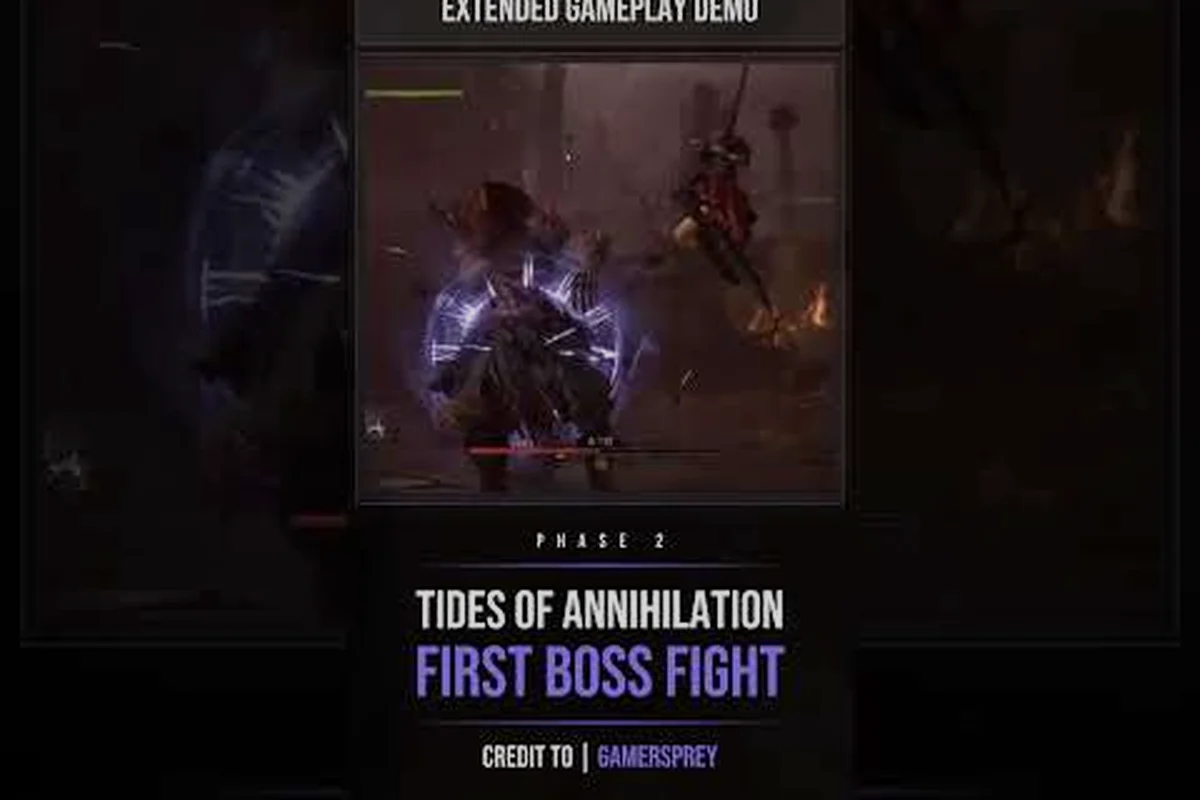
The Tides of Annihilation themes of revenge run deeper than a simple quest for payback — they form the emotional backbone of Gwendolyn's journey through a shattered London and the mythical realm of Avalon. Understanding how vengeance shapes her motivations, her relationships with the spectral Knights of the Round Table, and her ultimate confrontation with the demi-gods is essential for anyone who wants to fully appreciate the narrative layers this action-adventure weaves. Because the game draws heavily from Arthurian legend, the revenge narrative carries centuries of literary weight that transforms what could have been a straightforward action story into something far more tragic and compelling.
The Core Revenge Narrative and Gwendolyn's Motivation
The official plot description, as detailed on the Tides of Annihilation Steam page, establishes Gwendolyn as a lone survivor fighting alongside spectral knights to save her family and restore a broken world. What makes the Tides of Annihilation themes of revenge so compelling is that her vengeance isn't born from a single act of betrayal — it's layered across multiple losses that compound as the story unfolds. Her sister's disappearance serves as the immediate catalyst, but the destruction of London itself and the invasion by Avalon's demi-gods create a broader canvas for her wrath.
The narrative positions Gwendolyn as someone who has lost everything: her home, her family, and her sense of normalcy. This is where the revenge theme transforms from a simple plot device into a character study. She isn't just fighting to defeat evil — she's fighting to reclaim her identity in a world that has been fundamentally altered by forces she never knew existed.
How Family Loss Shapes the Revenge Arc
The sister relationship is the emotional anchor of the entire revenge narrative. According to the Wikipedia entry on Tides of Annihilation, the plot follows Gwendolyn's quest to find the Holy Grail to save her sister, restore the world, and exact vengeance on the demi-gods of Avalon. This three-part goal structure is crucial because it prevents the revenge from feeling one-dimensional — she isn't solely motivated by anger, but by love and duty as well.
The sister bond creates a moral complexity that elevates the Tides of Annihilation themes of revenge beyond simple retribution. Gwendolyn must balance her desire for vengeance against her need to protect what remains of her family. This internal conflict plays out through gameplay decisions and narrative choices, making players question whether her path of destruction is truly justified or whether she's repeating the same cycle of violence that destroyed Avalon in the first place.
The Demi-Gods as Objects of Vengeance
The demi-gods of Avalon aren't presented as cartoonish villains — they're complex figures with their own motivations and tragic backstories. This nuance is what makes the revenge narrative so effective. When Gwendolyn confronts these beings, she's not fighting pure evil but rather the consequences of a broken system that predates her existence.
| Demi-God | Role in Revenge Narrative | Player Perspective |
|---|---|---|
| Tyronoe | Early antagonist who tests Gwendolyn's resolve | First major emotional checkpoint |
| Arthur | Fallen king whose ideals were corrupted | Represents the failure of noble intentions |
| Mordred | Catalyst for Avalon's civil war | Symbolizes the destructive nature of ambition |
| Morgan le Fay | Manipulator pulling strings behind the scenes | The true architect of suffering |
Each encounter with these figures reveals more about the Tides of Annihilation themes of revenge, showing how vengeance begets vengeance across generations. The demi-gods themselves were once victims of betrayal and loss, which creates a tragic symmetry that the game explores through its boss encounters and environmental storytelling.
Arthurian Characters and Their Symbolic Meaning
The Tides of Annihilation arthurian characters meaning extends far beyond simple name recognition — each figure from the legend has been reimagined to serve the revenge narrative in specific ways. The game doesn't just transplant Arthurian characters into a modern setting; it deconstructs them, examining what happens when noble ideals collapse under the weight of betrayal and loss.
The Knights of the Round Table appear as spectral allies who fight alongside Gwendolyn, but their presence carries deeper significance. These aren't heroic figures from a glorious past — they're remnants of a failed system, bound to serve a new master who embodies the very vengeance that destroyed their kingdom. This creates a fascinating dynamic where Gwendolyn's revenge is literally supported by the ghosts of Avalon's past sins.
Sir Lamorak and the Mirror Space Encounter
The Xbox Wire preview details a fascinating encounter with the witch Tyronoe, where she transforms into a massive bird beast and creates a Mirror Space Folded Realm that Gwendolyn cannot pass through. What makes this moment significant for the revenge narrative is Sir Lamorak's intervention — he appears inside the mirror space, interferes with Tyronoe's plan, and throws his spear for Gwendolyn to shatter the mirrored barrier.
This moment encapsulates how the Tides of Annihilation themes of revenge operate on multiple levels. Lamorak's assistance isn't just a gameplay mechanic — it's a narrative statement about how vengeance creates unlikely alliances. The spectral knights aren't simply tools for combat; they're active participants in Gwendolyn's quest, each with their own reasons for wanting to see Avalon's power structure dismantled.
The Corruption of Noble Ideals
One of the most compelling aspects of the Tides of Annihilation arthurian characters meaning is how the game examines the corruption of noble ideals. King Arthur, traditionally portrayed as the epitome of righteous leadership, becomes a figure whose failures directly contributed to the current crisis. His inability to prevent Mordred's rebellion, his flawed judgment in trusting the wrong people, and his ultimate fall all serve as cautionary tales within the revenge narrative.
| Arthurian Figure | Traditional Role | Reimagined Meaning |
|---|---|---|
| Arthur | Righteous king | Failed leader whose ideals crumbled |
| Guinevere | Queen and love interest | Symbol of divided loyalties |
| Lancelot | Greatest knight | Example of how passion destroys duty |
| Merlin | Wise advisor | Architect of doomed prophecies |
| Gawain | Loyal nephew | Victim of family obligation |
The corruption of ideals theme reinforces the Tides of Annihilation themes of revenge by showing that even the noblest intentions can lead to destruction. Gwendolyn's quest for vengeance mirrors Arthur's own failures — she risks becoming exactly what she hates if she doesn't learn from the mistakes of the past.
The Mythical Realm Guide: Understanding Avalon's Geography
For players seeking a Tides of Annihilation mythical realm guide, understanding Avalon's geography is essential to grasping the full scope of the revenge narrative. Avalon isn't just a fantasy location — it's a reflection of the broken relationships and unresolved conflicts that drive the story forward. The shattered London setting serves as a bridge between the modern world and the mythical realm, creating a visual representation of how the two worlds have collided.
The mythical realm of Avalon operates under its own rules, with locations that correspond to different aspects of Arthurian legend. The game's level design reinforces the revenge theme by making players traverse environments that are literally shaped by past betrayals and conflicts. Every ruined castle, every corrupted forest, and every frozen battlefield tells part of the story of how Avalon fell.
Key Locations and Their Narrative Significance
| Location | Narrative Significance | Connection to Revenge |
|---|---|---|
| Shattered London | Ground zero of the invasion | Represents everything Gwendolyn lost |
| Camelot Ruins | Once-glorious capital | Symbol of fallen ideals |
| The Mirror Space | Dimensional rift | Represents fractured reality |
| Grail Sanctuary | Goal of the quest | Hope for restoration |
| Avalon's Throne | Seat of demi-god power | Final confrontation point |
Each location in this Tides of Annihilation mythical realm guide serves a dual purpose — they're both gameplay spaces and narrative devices. The Grail Sanctuary, for instance, represents the possibility of redemption, but reaching it requires Gwendolyn to confront the very forces that destroyed her life. The geography of the game world becomes a map of her revenge, with each area representing a step closer to either salvation or damnation.
The Shattered London Setting
London's destruction serves as more than just a visually striking backdrop — it's a constant reminder of what Gwendolyn is fighting for. The ruined landmarks, the abandoned streets, and the remnants of everyday life all reinforce the stakes of her quest. This is where the Tides of Annihilation themes of revenge become most visceral, because players can see exactly what was lost.
The decision to set the game in London rather than a purely fictional city adds weight to the revenge narrative. These are recognizable locations — Big Ben, the Thames, familiar streets — that have been violently transformed. The game's environmental storytelling shows how the invasion didn't just destroy buildings; it destroyed lives, families, and futures. Gwendolyn's revenge becomes personal because players can imagine themselves in her position, losing everything they know and love.
Easter Eggs and Hidden Story Details
The Tides of Annihilation easter eggs in story content reward attentive players with deeper insights into the revenge narrative. These hidden details aren't just collectibles — they're narrative fragments that piece together the full picture of what happened before the game's events. For players who want to understand the complete story, seeking out these easter eggs is essential.
The game embeds lore fragments throughout the environment that reveal the perspectives of various characters. Some of these fragments come from the demi-gods themselves, showing their side of the conflict and complicating the black-and-white morality of the revenge narrative. Others come from ordinary Londoners who witnessed the invasion, providing ground-level perspectives on the catastrophe. Others come from ordinary Londoners who witnessed the invasion, providing ground-level perspectives on the catastrophe, while the deeper mythological underpinnings of these conflicting viewpoints—and how they shape the game's overarching narrative—are explored in our Tides Of Annihilation Lore breakdown.
Hidden Lore Fragments and Their Implications
| Easter Egg Type | Location | Narrative Payoff |
|---|---|---|
| Demi-god monologues | Boss arenas | Reveals villain motivations |
| Civilian recordings | Abandoned buildings | Shows human cost of invasion |
| Knight memories | Spectral shrines | Explains knight backstories |
| Arthur's journals | Camelot Ruins | Details the fall of Avalon |
| Morgan's schemes | Hidden chambers | Foreshadows later betrayals |
These Tides of Annihilation easter eggs in story content transform the revenge narrative from a simple quest into a complex web of interconnected tragedies. The civilian recordings are particularly effective because they humanize the conflict — these weren't just soldiers fighting a war; they were ordinary people whose lives were destroyed by forces they couldn't comprehend.
The demi-god monologues serve a different purpose, showing that the villains of the story believe they're justified in their actions. This moral ambiguity is central to the Tides of Annihilation themes of revenge, because it forces players to question whether Gwendolyn's quest for vengeance is truly righteous or whether she's simply perpetuating a cycle of violence that has consumed Avalon for generations.
Story Predictions and Future Narrative Directions
The Tides of Annihilation story predictions that have emerged from community analysis suggest the revenge narrative is building toward something far more complex than a simple victory over evil. Based on the game's themes and the patterns established in Arthurian legend, several narrative directions seem likely as the story progresses.
The revenge cycle theme suggests that Gwendolyn's quest may ultimately lead to a choice: continue the cycle of vengeance or break it. This is where the Tides of Annihilation themes of revenge become most philosophically interesting, because the game seems to be setting up a scenario where Gwendolyn must decide whether her sister's rescue is worth sacrificing her own humanity.
Potential Narrative Twists and Character Arcs
| Prediction | Supporting Evidence | Narrative Impact |
|---|---|---|
| Sister's fate is more complex than expected | Sister relationship emphasized in official materials | Could reframe entire revenge motivation |
| Arthur may be redeemable | Arthurian characters meaning suggests complexity | Creates moral dilemma for Gwendolyn |
| Morgan le Fay as hidden antagonist | Easter eggs hint at manipulation | Expands scope of revenge target |
| Knights may betray Gwendolyn | Spectral knight motivations unclear | Adds trust element to narrative |
| Revenge may consume Gwendolyn | Themes of corruption throughout story | Potential tragic ending |
These Tides of Annihilation story predictions aren't just speculation — they're grounded in the narrative patterns the game has established. The sister's fate prediction is particularly significant because it could fundamentally alter how players interpret the revenge narrative. If Gwendolyn's sister has been corrupted or transformed by Avalon's influence, then her quest to save her family might require confronting the very person she's trying to rescue.
The possibility of knight betrayal adds another layer of complexity to the Tides of Annihilation themes of revenge. The spectral knights have their own agendas, and their alliance with Gwendolyn may be temporary or conditional. This uncertainty creates tension throughout the narrative, as players never know which allies can be trusted.
The Revenge Cycle and Its Consequences
The game's exploration of the revenge cycle draws heavily from Arthurian tragedy, where the sins of one generation echo through the next. Mordred's rebellion against Arthur, Arthur's conflict with Lancelot, and the eventual fall of Camelot all stem from cycles of betrayal and revenge that could have been broken at any point but weren't.
Gwendolyn's quest places her at the center of this cycle, and the Tides of Annihilation themes of revenge suggest she may have the power to either perpetuate it or end it. The game's narrative seems designed to make players question whether revenge truly brings satisfaction or whether it simply creates new wounds that will eventually fester.
The revenge cycle concept is reinforced through gameplay mechanics as well. Each boss fight represents a confrontation with the past, and each victory brings Gwendolyn closer to either her goal or her own destruction. The game doesn't offer easy answers, which is what makes the narrative so compelling for players who appreciate complex storytelling. To see how this cycle plays out across the campaign's key confrontations, check the final boss breakdown.
Frequently Asked Questions
How do the Tides of Annihilation themes of revenge differ from typical action game narratives?
The revenge narrative in Tides of Annihilation is uniquely layered because it draws from Arthurian tragedy, where vengeance always carries consequences. Unlike games where revenge is portrayed as righteous justice, this story emphasizes how Gwendolyn's quest mirrors the very conflicts that destroyed Avalon, creating a morally complex narrative that questions whether her actions are justified.
What role does Gwendolyn's sister play in the revenge narrative?
Gwendolyn's sister serves as both the emotional catalyst and the moral compass for the revenge quest. Her disappearance motivates the entire journey, but her fate remains uncertain throughout the story. This uncertainty creates tension between Gwendolyn's desire for vengeance and her need to protect her family, forcing players to question what she's willing to sacrifice.
Are there hidden story details that change the interpretation of the revenge theme?
Yes, the Tides of Annihilation easter eggs in story content reveal that the demi-gods have their own tragic backstories, complicating the black-and-white morality of revenge. Civilian recordings and knight memories show the human cost of the invasion, while hidden monologues suggest the villains believe they're justified. These details transform the revenge narrative into a complex web of interconnected tragedies.
How does the Arthurian setting enhance the revenge narrative?
The Arthurian setting provides a framework of legendary tragedy that amplifies the revenge themes. Characters like Arthur, Mordred, and Morgan le Fay carry centuries of literary weight, and their reimagined roles in the game's story show how noble ideals can corrupt into destructive vengeance. This connection to classic literature gives the revenge narrative depth and resonance.
What story predictions suggest about the ending of the revenge arc?
Community predictions point to Gwendolyn rejecting vengeance after witnessing Sir Lamorak's sacrifice against Tyronoe's Mirror Space. The Holy Grail quest likely ends with her choosing to restore Avalon rather than destroy the demi-gods, breaking the cycle her sister's abduction started. This aligns with the game's corruption themes and Arthurian tragedy framing.