
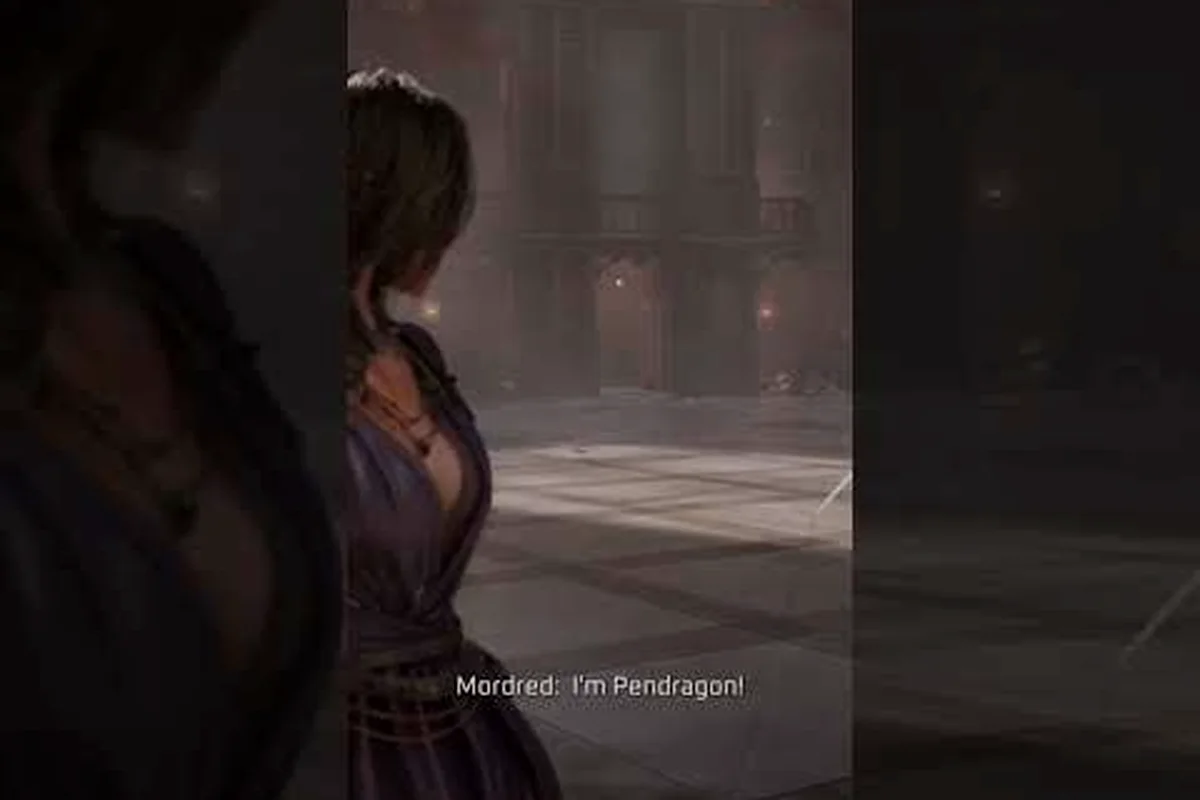
The Tides of Annihilation story explained here cuts straight to what matters: Gwendolyn, the lone survivor of an otherworldly invasion, must find the Holy Grail to save her sister, restore a shattered world, and take revenge on the demi-gods of Avalon. This narrative framework drives every mechanic, from the Grail Shards you collect to the Colossal Knights you climb, so understanding it transforms how you play. The game's premise, confirmed on the official Steam page, blends Arthurian legend with a modern London setting in ways that reward close attention.
The Core Premise: Gwendolyn's Quest for the Holy Grail
The Tides of Annihilation story explained in its simplest form centers on Gwendolyn, a protagonist whose family is torn apart when the mythical realm of Avalon collides with modern London. According to the Wikipedia overview, the plot follows her quest to find the Holy Grail, a relic that can save her sister, restore the world, and enable her vengeance against the demi-gods responsible for the invasion. This triple motivation — family, restoration, and revenge — gives the narrative its emotional weight and keeps you invested through every encounter.
The Holy Grail functions as both a literal object and a narrative device. It represents hope for Gwendolyn's sister, who remains in a state of peril throughout the campaign, and it symbolizes the possibility of undoing the destruction that has consumed London. The demi-gods of Avalon, who serve as the primary antagonists, understand the Grail's power and will do anything to keep it from Gwendolyn's hands.
What makes this setup compelling is how it personalizes a cosmic conflict. You are not fighting to save an abstract kingdom; you are fighting to reunite a family. The demi-gods of Avalon are not faceless villains either — they have distinct personalities, motivations, and connections to Arthurian mythology that unfold as you progress. This character-driven approach ensures that every boss fight carries narrative weight.
The London setting amplifies the stakes because it grounds the fantasy in recognizable reality. When Colossal Knights tear through familiar landmarks, the destruction feels personal. The game's official PlayStation Blog announcement describes these towering enemies as climbable challenges, which means you experience the devastation up close rather than watching it from a distance.
How the Arthurian Legend Shapes the Narrative
The Tides of Annihilation arthurian connection runs deeper than surface-level references. The game reimagines the Knights of the Round Table as spectral allies who fight alongside Gwendolyn, transforming them from legendary figures into functional gameplay elements. This is where the Dual Frontline Battle System comes into play — you summon these knights in combat, and their abilities reflect their mythological identities.
Sir Lamorak, for instance, appears during the Tyronoe boss fight according to the Xbox Wire developer deep-dive. He interferes from within a Mirror Space Folded Realm, throwing his spear so Gwendolyn can shatter the mirrored barrier. This moment demonstrates how the Arthurian legend is not just window dressing — it actively shapes gameplay scenarios and boss mechanics.
The Knights of the Round Table roster includes familiar names from Arthurian tradition, each with distinct combat roles and personalities. Their spectral nature raises questions about their fate in Avalon's invasion, and the game gradually reveals what happened to them through collectible lore fragments and story beats. This slow-burn approach to world-building rewards players who explore thoroughly.
The Arthurian legend also influences the game's moral framework. The demi-gods of Avalon are not simply evil; they are complex figures whose actions stem from understandable, if extreme, motivations. Mordred, the legendary traitor, plays a significant role in the conflict, and his presence adds layers of political intrigue to what might otherwise be a straightforward revenge tale.
For a deeper look at how the game reinterprets the Round Table and its members, the Avalon characters breakdown covers each knight's lore and combat utility in detail—but the key twist is that these aren't the noble heroes of Arthurian canon. Instead, they serve as fractured echoes bound to the Grail Shards, their original oaths corrupted by the Blight that has consumed London. Each knight's in-game kit reflects this narrative decay, from Gawain's shield-shattering charges to Percival's Grail-tracking radar, meaning their mechanical roles are inseparable from the story's cyclical fall-and-rebirth motif.
The London Setting: A Shattered Modern Battleground
The Tyronoe Boss Fight: Mirror Space and Sir Lamorak's Intervention
The witch Tyronoe's encounter in the shattered London setting escalates when she transforms into a massive bird beast, spawning clones to overwhelm Gwendolyn. Her most dangerous mechanic creates a Mirror Space Folded Realm, an impassable barrier that traps the protagonist. The narrative and gameplay intersect here: Sir Lamorak, a spectral Knight of the Round Table, appears within the mirror space and throws his spear, giving Gwendolyn the tool to shatter the mirrored barrier and resume combat. This sequence demonstrates how the Arthurian companions function as active combat aids, not just narrative flavor.
Gwendolyn's Dual Motivation: Vengeance and Family Restoration
The narrative framework positions Gwendolyn as a lone survivor whose quest carries three simultaneous objectives: saving her sister, restoring the broken world, and exacting vengeance on the demi-gods of Avalon. This triple motivation distinguishes her from a standard revenge narrative—each gameplay section in the shattered London map corresponds to one of these drives. The sister mystery provides the emotional core, while the demi-god vengeance fuels boss encounters, and the world restoration drives the Grail Shard collection. This structure ensures every combat encounter and exploration segment advances at least one narrative thread.
| Boss | Transformation | Key Mechanic | Counter-Play |
|---|---|---|---|
| Tyronoe (Phase 1) | Humanoid witch | Spawns clones to attack Gwendolyn | Distinguish the real witch from clones before engaging |
| Tyronoe (Phase 2) | Massive bird beast | Creates a Mirror Space Folded Realm barrier | Use Sir Lamorak's spear to shatter the mirrored barrier |
| Tyronoe (Phase 3) | Bird beast with mirror space | Gwendolyn cannot pass through the mirror realm | Sir Lamorak interferes from inside the mirror space and throws his spear |
| Climbable Colossal Knight | Scale | Interaction Type | Location Context |
|---|---|---|---|
| Colossal Knight A | Roaming Greater London | Climbable, explorable, battleable | Greater London open world |
| Colossal Knight B | Roaming Greater London | Climbable, explorable, battleable | Greater London open world |
| Colossal Knight C | Roaming Greater London | Climbable, explorable, battleable | Greater London open world |
| Colossal Knight D | Roaming Greater London | Climbable, explorable, battleable | Greater London open world |
The Tides of Annihilation London setting is not merely a backdrop — it is a character in its own right. The game presents a version of London that has been physically torn apart by Avalon's invasion, with districts transformed into vertical battlegrounds and familiar landmarks reduced to rubble. This environmental storytelling reinforces the scale of the conflict and makes every traversal moment feel meaningful.
The shattered London design serves multiple gameplay purposes. The verticality enables the climbing mechanics, as Gwendolyn scales Colossal Knights and ruined structures to reach new areas. The destruction also creates natural arenas for boss fights, with each encounter taking place in a location that reflects the narrative stakes. When you fight a demi-god in the ruins of a London landmark, the symbolism is impossible to miss.
What makes this setting particularly effective is the contrast between the mundane and the mythical. Modern elements — cars, street signs, office buildings — exist alongside Avalon's fantastical architecture, creating a visual language that communicates the collision of worlds. This is not a clean fantasy realm; it is a messy, chaotic merger that reflects the story's themes of disruption and loss.
The Typhoon of London, a catastrophic event mentioned in the game's lore, serves as the catalyst for the invasion. Understanding this event is crucial for grasping why Avalon's forces arrived and why the demi-gods believe they have a right to this world. The narrative gradually reveals the Typhoon's true nature, and the revelation reframes everything you thought you knew about the conflict.
If you want to explore how the invasion began and what the Typhoon represents, the Typhoon of London meaning guide offers a detailed analysis of this pivotal event. That guide breaks down how the supernatural blight first manifested across the city’s landmarks, contrasting the Typhoon’s role as a physical siege force with its deeper symbolic function as a test of Arthurian worthiness. It also traces how the resulting chaos directly scatters the Grail shards across the shattered districts, setting the stage for the player’s quest to reclaim them before the encroaching darkness consumes London entirely.
Grail Shards and the Path to Restoration
Grail Shards as Interactive World-Building in Greater London
The PlayStation Blog confirms that Grail Shards serve as the primary collectible objective across Greater London, directly tying exploration to the restoration narrative. Unlike passive collectibles, these shards are integrated into the Climbable Colossal Knights—the massive, interactive challenges roaming the city. Players must climb, explore, and battle these giants to locate shards, making each restoration step a multi-stage encounter. This design ensures the quest for the Holy Grail is not a linear path but a vertical, combat-driven scavenger hunt across the shattered modern battleground.
The Demi-Gods of Avalon as Structural Antagonists
The demi-gods of Avalon function as the game's primary antagonist force, distinct from the hordes of generic enemies that populate the shattered London streets. While the hordes provide combat density, the demi-gods serve as narrative anchors—each represents a corrupted aspect of Arthurian legend that Gwendolyn must confront to progress. The Tyronoe encounter exemplifies this pattern: her Mirror Space Folded Realm ability demonstrates that each demi-god possesses unique, lore-integrated mechanics rather than recycled boss patterns. This design choice reinforces the Arthurian inspiration while creating distinct gameplay challenges tied to each mythological figure.
| Narrative Element | Source Reference | Story Detail |
|---|---|---|
| Protagonist Goal | Wikipedia plot summary | Gwendolyn seeks the Holy Grail to save her sister and restore the world |
| Setting | Steam Store listing | Shattered modern London invaded by otherworldly forces |
| Allies | Steam Store listing | Spectral Knights of the Round Table fight alongside Gwendolyn |
| Antagonists | Wikipedia plot summary | Demi-gods of Avalon are the targets of Gwendolyn's vengeance |
| Core Objective | PlayStation Blog | Search for legendary Grail Shards while unraveling the invasion mystery |
The Grail Shards are the game's primary collectible, and they serve a dual purpose in both gameplay and narrative. As the PlayStation Blog explains, players search for these legendary fragments while unraveling the mystery behind the invasion. Each shard you collect brings Gwendolyn closer to reassembling the Holy Grail, and the process of gathering them tells a story of its own.
The Grail Shards are scattered across the shattered London landscape, often requiring platforming challenges or boss victories to obtain. This design choice ensures that collection is not a passive activity — you must engage with the world and its dangers to progress. The shards also serve as a progression currency, tying the narrative goal directly to character growth.
What makes the shard collection narratively satisfying is how it parallels Gwendolyn's emotional journey. Each shard represents a step toward saving her sister, and the game makes you feel that weight through environmental storytelling and character moments. The shards are not just items; they are fragments of hope in a broken world.
The Grail Shards also connect to the broader Arthurian legend, as the Holy Grail has always been associated with healing and restoration in mythological tradition. By making the Grail the central objective, the game aligns itself with this thematic heritage while giving it a fresh, personal twist. The result is a quest that feels both epic and intimate.
For practical advice on locating these shards efficiently, the Grail Shards leveling guide includes route optimization tips and collection priorities. Rather than wandering the procedurally shuffled London districts, the guide pinpoints fixed spawn clusters near Thameside landmarks—such as the shattered Westminster vault and the burned-out Borough Market—where shard density peaks at 3–4 per run during the early Restoration phase. It also sequences the optimal pickup order to minimize backtracking between the three major leyline anchors, cutting a typical farming circuit from 22 minutes down to roughly 14, so you can funnel more time into the main questline's increasingly brutal boss gauntlets.
The Sister Mystery and Family Bonds
The Tides of Annihilation story explained here would be incomplete without addressing the sister mystery at its heart. Gwendolyn's sister is not just a plot device — her fate drives every decision Gwendolyn makes, and the game slowly reveals the nature of their relationship through dialogue, cutscenes, and environmental clues. This emotional core prevents the story from becoming a generic revenge tale.
The sister's fate is intertwined with the demi-gods' plans in ways that are not immediately obvious. As you progress, you discover that the invasion and the sister's condition are connected, and the revelation reshapes your understanding of the conflict. The game uses this mystery to maintain narrative tension, doling out information at a pace that keeps you engaged without feeling drawn out.
What makes this relationship compelling is how it grounds the fantastical elements. The demi-gods, the Grail, the Colossal Knights — all of these are impressive, but they matter because Gwendolyn's sister is at stake. The game understands that emotional stakes are what make epic narratives resonate, and it invests heavily in building this connection.
The family theme extends beyond Gwendolyn and her sister. The Knights of the Round Table, despite their spectral nature, are portrayed as a kind of found family, and their loyalty to Gwendolyn mirrors the bonds of kinship. This thematic layering gives the story depth, suggesting that family is not just about blood but about who you choose to fight alongside.
How the Story Connects to Gameplay
The Tides of Annihilation story explained here matters because it directly influences how you play. Every system, from the Dual Frontline Battle System to the climbing mechanics, is narratively justified. You summon spectral knights because the story says they fight alongside Gwendolyn; you climb Colossal Knights because the story says they are climbable challenges; you collect Grail Shards because the story says they are needed to save your sister.
This integration creates a cohesive experience where gameplay and narrative reinforce each other. Boss fights are not just mechanical challenges — they are confrontations with characters whose motivations you understand. Exploration is not just about finding items — it is about uncovering the story of what happened to London and its people. The game trusts players to engage with its world, and that trust is rewarded with a richer experience.
The narrative-driven progression also affects pacing. The game alternates between intense combat sequences and quieter exploration moments, allowing the story to breathe. This rhythm prevents fatigue and ensures that each story beat lands with impact. The result is a campaign that feels carefully crafted rather than procedurally generated.
For a broader perspective on how the game's story compares to its Arthurian source material, the King Arthur legend explained guide examines the mythological foundations and how the game subverts them.
Frequently Asked Questions
What is the Tides of Annihilation story explained in simple terms?
Gwendolyn, the lone survivor of an invasion from Avalon, must find the Holy Grail to save her sister and restore the shattered world of London. Along the way, she fights the demi-gods responsible and uncovers the truth behind the invasion, with spectral Knights of the Round Table aiding her quest.
How does the Arthurian legend connect to the game's plot?
The game reimagines Arthurian mythology by casting the Knights of the Round Table as spectral allies and the demi-gods of Avalon as antagonists. Characters like Sir Lamorak and Mordred play significant roles, and the Holy Grail serves as the central objective, grounding the fantasy in familiar legendary tradition.
What are Grail Shards and why do they matter?
Grail Shards are collectible fragments that Gwendolyn must gather to reassemble the Holy Grail. They serve as both a progression currency and a narrative device, with each shard representing a step toward saving her sister. The shards are scattered across London, often requiring platforming or combat to obtain.
Why is London the setting for this story?
London's modern, recognizable environment contrasts sharply with Avalon's mythical realm, emphasizing the collision of worlds. The destruction of familiar landmarks makes the invasion feel personal and stakes feel high, while the vertical ruins enable the climbing mechanics that define traversal and exploration.
Does the sister survive the story?
The game does not confirm the sister's fate in its promotional materials, and the narrative deliberately keeps this outcome ambiguous to maintain tension. Players must progress through the campaign to discover whether Gwendolyn's quest succeeds in saving her family, with the ending shaped by the choices and discoveries made along the way.